
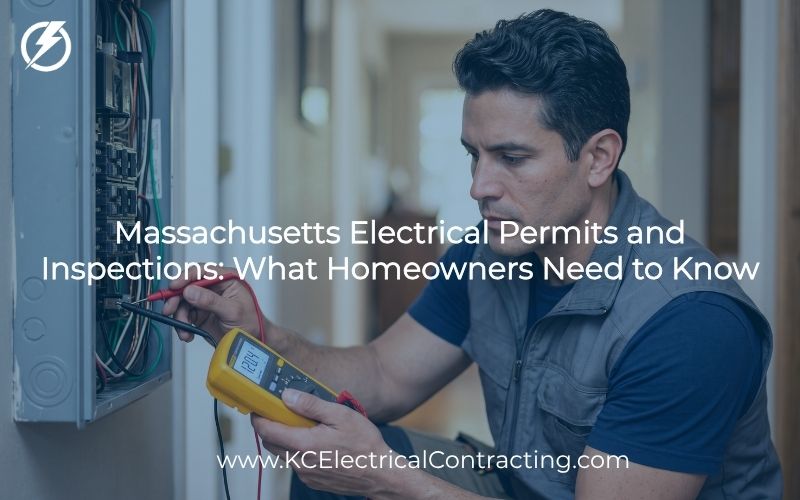
If you are planning on remodeling your kitchen, finishing your basement or upgrading your electrical services, then it is important to make sure you obtain any required electrical permits and inspections.
Most electrical work in Massachusetts requires a permit and inspection. If you need to add extra circuits, replace your electrical panel, or upgrade to a 200 amp from a 100 amp service, you need to understand the permitting process to help prevent any unforeseen issues, delays, or potential safety issues
If you hire and work with a licensed electrician, they will handle this for you.
Why Are Electrical Permits Required in Massachusetts?
Electrical permits can help ensure that any electrical work done is completed safely and complies with the Massachusetts Electrical Code.
Electrical permits and inspections will help protect you as a homeowner by:
- Ensuring electrical safety. Inspections can help you find any unsafe wiring, overloading, grounding issues, and other concerns.
- Ensuring electrical work is done to the correct codes. Any electrical work must be carried out to the correct standards set by both the state and local authority.
- Protecting your investment. Any electrical work that is permitted correctly will give you proof to help if you decide to sell or renovate.
- Preventing issues in the future. If electrical work is not performed in accordance with the established codes, it may lead to the need for repairs, which can result in delays and increased expenses.
- Giving you peace of mind. Having your work inspected by your local inspector offers an additional layer of security.
As of April 24, 2026, Massachusetts uses the 2026 National Electrical Code (NEC) alongside any Massachusetts-specific amendments in 527 CMR 12.00. All electrical work must comply with these requirements. Installations must only be carried out by licensed electricians.
What Electrical Work Needs a Permit in Massachusetts?
While most electrical work will require an electrical permit, it will depend on what kind of work you are doing and what local rules apply to your home.
Electrical Work When Remodeling
Remodeling projects usually involve changes to existing electrical systems. Even small electrical changes will often need a permit.
Examples of this could be:
- Installing new wiring for a kitchen, bathroom, basement, or home addition
- Adding new circuits for new appliances
- Moving outlets, switches, or lighting fixtures
- Installing recessed lighting or additional electrical outlets
- Upgrading wiring to accommodate new appliances
- Adding GFCI or AFCI protection where required
- Replacing old or unsafe electrical wiring
For example, when you remodel your kitchen to add a new electric oven, dishwasher, or additional countertop outlets, your electrician will need to determine the necessary circuits and code requirements.
Permits ensure that improvements to your electrical systems are handled properly and safely.
Electrical Panel Replacements and Service Upgrades
Electrical panel replacements and service upgrades are more complex projects that usually require permits and inspections.
Your electrician may need to do the following if you’re upgrading your electrical service from 100 amp to 200 amp.
- Determine the electrical capacity of your home.
- Perform an electrical load calculation.
- Determine if your service entry wiring and equipment need replacing.
- Install a new electrical panel and equipment.
- Coordinate with your electrical utility company.
- Arrange an electrical inspection.
Upgrades will often include more than just a panel upgrade. Depending on your current electrical setup, you may also need additional wiring, grounding, bonding, or service equipment improvements.
Because these projects involve your home’s main electrical supply, it is very important to obtain the necessary permits and coordinate everything properly.
Electrical Permit Process in Massachusetts
Although processes can vary depending on the town, you would generally follow these steps:
- The electrician will survey the project. Before requesting an electrical permit, your electrician will assess your project to see what electrical improvements are required. For remodeling projects, your electrician will look at the layout, appliances, and existing wiring. When upgrading your service, your electrician will examine your existing electrical panel, service, and electrical demand.
- The electrical permit is obtained. In Massachusetts, you request electrical permits from the local building department or wiring inspector’s office. The permit will include details about the work required and which licensed electrician will be doing the work. Your electrician will handle most residential electrical projects. They will request the permit and book the necessary inspections. Depending on the town and project, you may need to provide additional paperwork or approvals.
- The electrical work begins. Once you have the correct permits, your electrician can start the work. For remodeling projects, this may include running new wiring, installing electrical boxes, and preparing circuits before your contractor closes your walls and ceilings. For service upgrades, your electrician may install a new panel, service conductors, meter-related equipment, and grounding components as needed.
- Schedule necessary electrical inspections. The local wiring inspector will inspect your work during different stages of the project to make sure you are in compliance with applicable electrical requirements. Some projects need more than one inspection, while others may only need a final inspection.
- The project receives final approval. Once the inspections are complete and any corrections are made, your electrical work can receive final approval. Keep a copy of your permits and inspection documentation with your home improvement documents.
What Happens During an Electrical Inspection?
Electrical inspections ensure your installation meets all applicable safety and code requirements.
The inspector may inspect the following:
- Proper wire sizes and circuit protection
- Electrical panel installation and labeling
- Grounding and bonding
- GFCI and AFCI protection where required
- Proper installation of outlets, switches, and fixtures
- Electrical box placement and accessibility
- Compliance with applicable electrical code requirements
The inspection requirements will vary depending on the type of work you are doing.
Rough Electrical Inspection
A rough electrical inspection tends to be carried out once new electrical wiring and boxes have been installed but before any insulation or dry wall is installed.
This is especially important during kitchen remodels, basement finishing projects, and home additions.
The inspector can review wiring and installation details while everything remains accessible.
Important: Be sure you do not put any walls or ceilings up until your required rough electrical inspection has been completed and approved.
Final Electrical Inspection
The final inspection generally happens once the electrical work has been completed.
At this stage, the inspector can then verify outlets, switches, fixtures, panels, circuit protection, and other completed electrical components.
The electrician will address any corrections before the work receives final approval.
FAQ About Electrical Permits and Inspections
Are Electrical Inspections Required for a 200-Amp Service Upgrade?
Yes. Upgrading your home’s electrical service generally requires an electrical permit and inspection in Massachusetts.
A 100-amp to 200-amp service upgrade will involve some major changes to your home’s electrical distribution system. The local wiring inspector will need to verify that the installation meets applicable requirements.
Your electric company may also require you to gain approval or complete an inspection.
Plan your upgrade so your electrician can work with the utility and local inspector to limit disruption to your home.
How Long Does the Electrical Permit and Inspection Process Take?
This will depend on several factors, including your town, the complexity of your job, and if the inspectors are available.
Simple electrical jobs may not take too long, but larger remodeling projects or service upgrades may take longer due to the extra coordination.
Factors that can affect the timeline include:
- Local permit processing times
- Inspector availability
- Whether you need both rough and final inspections
- Coordination with other contractors
- Utility scheduling for electrical service upgrades
- Corrections or additional work identified during inspection
If you are planning a major renovation, involve your electrician early. Your electrician often needs to coordinate the electrical work with plumbing, framing, insulation, and drywall installation. Waiting until the last minute to address electrical requirements can delay the entire project.
Can Homeowners Do Their Own Electrical Work in Massachusetts?
Massachusetts has strict licensing requirements for electrical work. Homeowners should not assume that owning a property automatically allows them to perform electrical installations or obtain an electrical permit.
Massachusetts generally requires all electrical work to be done by properly licensed professionals, unless specifically exempt by law.
Before attempting electrical work yourself, check with your local wiring inspector to see what licensing, permitting, and inspection requirements you need.
When it comes to remodeling projects, panel replacements, and electrical service upgrades, the safest and most practical approach is to hire a licensed electrician.
What Happens If You Do Electrical Work Without a Permit?
It may save you time or money to skip getting a permit for electrical work, but you may run into some issues.
Unpermitted electrical work may result in:
- Safety issues due to incorrect wiring.
- Extra costs to cut into your completed walls and rectify the electrical work.
- Delays to your project will occur because you won’t have the necessary permits or inspections.
- Issues when trying to sell your home, as the buyer or home inspector could question the electrical improvements.
- Potential issues with your insurance.
If you’ve recently purchased an older home and are not sure whether the electrical work was done to code, a licensed electrician can check it out and suggest improvements.
Why Hire a Licensed Electrician for Your Remodel or Service Upgrade?
Electrical work should be considered to be one of the most important aspects of any home improvement project. The electrical installations will affect the safety, reliability, and ability to meet the demands of modern-day electrical systems.
By working with a licensed electrician you can be sure that the job will be planned and carried out to the correct standard.
An experienced electrician can help:
- Assess your current electrical setup
- Provide recommendations to improve your electrical setup
- Know what permits and inspections are required
- Work with the local inspectors and utility companies
- Install wiring, panels, and electrical equipment safely
- Deal with any issues found during inspections to make sure the project is done correctly.
Having an electrician who understands how electrical work fits into the overall remodeling process will also help.
Planning an Electrical Remodel or Service Upgrade in Massachusetts?
Whether you’re remodeling your kitchen, finishing your basement, replacing an outdated electrical panel, or upgrading to 200-amp service, it’s important that all your permits and inspections are done correctly.
KC Electrical Contracting can help you plan and complete electrical improvements safely and efficiently. We will assess your current electrics and ensure you get everything permitted and inspected.
Get in touch with KC Electrical Contracting today to talk about your electrical requirements for your next home improvement project.