
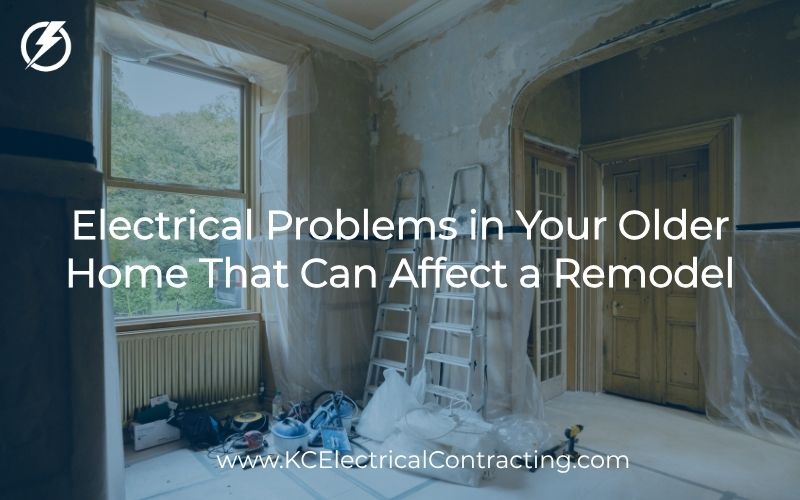
Remodelling an older home can give you a space that has the comfort and functionality you want without having to move. But once walls start coming down, you might discover problems with the electrical system that can delay your home renovation because it isn’t ready for everything you have planned.
Older homes were built when households didn’t need many of the electrical devices that we now use regularly. Today’s homes have larger appliances, computers, entertainment systems, air conditioning, EV chargers, and countless devices plugged in or charging every day.
If you’re planning some major home renovation project like a kitchen remodel, a finished basement, or a major addition, one of the smartest things you can do is take a close look at the electrical system as early as possible in the planning process, ideally before you even break ground. It can help you identify any potential electrical problems that might come up before they cause you some serious headaches.
Common Electrical Problems Found in an Older Home
An Electrical Service That Is Too Small
Many older homes were built with 60-amp or 100-amp electrical service that may have been sufficient back then. However, a remodel can significantly increase electrical demand.
A renovated home may include:
- Electric stoves and wall ovens
- Larger refrigerators and other kitchen appliances
- Central air conditioning or heat pumps
- Electric water heaters
- Additional lighting and outlets
- Finished basements or home offices
- EV chargers
- Hot tubs or pools
Before adding these loads, it’s worth getting an electrician to do a load calculation to figure out if your existing electrical service will be up to the task.
If it isn’t, you may need to upgrade your electrical service from 100 to 200 amps as part of the renovation.
An Outdated Electrical Panel
Even if your electrical service is adequate for your home size and electricity usage, the electrical panel itself may cause problems and will need attention.
Older panels may have limited space for new circuits, outdated components, or equipment that is no longer appropriate for the home’s electrical needs.
A major remodel often requires new dedicated circuits for appliances, lighting, and other equipment. If there isn’t enough room in the existing panel, your electrician may recommend replacing it with a larger modern panel.
Addressing the panel at the beginning of the project can make it easier to accommodate both your current remodel and future electrical needs.
Old or Outdated Wiring
Opening walls during a renovation many times reveals wiring that has been hiding for decades.
Depending on the age of the house, you could find older wiring methods that don’t meet today’s electrical standards or aren’t suitable for today’s electrical demands.
Problems may include deteriorated insulation, damaged wiring, improper modifications or wiring installed by previous homeowners without professional oversight.
Rather than simply connecting new electrical work to questionable existing wiring, an electrician can determine what can safely remain and what they should replace.
Not Enough Outlets
Older homes can’t handle the number of electrical devices we use today.
Too often, that means there are not enough places to plug things in, especially in bedrooms, living rooms, and kitchens. People end up making do by bringing out the extension cord or plugging a number of cords into a power strip, not exactly the most elegant long-term solution.
A good time to fix the issue is when you’re renovating. Think about how you use each room and where you’ll need power for things like the televisions, your computer, lamps, kitchen appliances, and all the charging stations. It’s much easier to have the electricians add extra outlets before they close the walls.
Kitchen Electrical Requirements
The kitchen is the room that’s going to use the most power in your house.
If you’re planning any major changes in the kitchen, such as replacing old appliances, changing the kitchen layout, or adding new circuits for countertop receptacles, you will probably need to upgrade your electrical system as well.
This is why it’s important to get an electrician on board early in the planning process, rather than trying to sort out the power issues later after the cabinets and appliances have already been ordered.
Missing GFCI and AFCI Protection
Electrical safety requirements have changed significantly over the years.
Modern electrical systems use ground-fault circuit interrupter (GFCI) and arc-fault circuit interrupter (AFCI) protection in locations where required. Older homes may have little or none of this protection.
During a remodel, you may need to update electrical work in affected areas to meet current requirements.
Your electrician can identify where additional protection is needed and make sure new electrical work is installed correctly.
Ungrounded Outlets
Two-prong outlets are still common in some older homes. They can be a sign that the home’s electrical system doesn’t include modern equipment grounding.
Simply replacing a two-prong receptacle with a three-prong outlet doesn’t automatically provide a proper ground.
If your remodel involves rooms with older outlets, have an electrician evaluate the wiring and determine the appropriate solution.
Previous DIY Electrical Work
Older homes have often passed through several owners, and not every renovation or repair was necessarily completed by a licensed electrician.
Once you open walls and ceilings, you may discover unusual wiring, overloaded boxes, improperly installed connections, or other modifications.
Some may have worked for years without an obvious problem, but that doesn’t mean they should be incorporated into a newly remodeled space.
A renovation gives you the opportunity to correct these issues while the wiring is accessible.
New Technology Can Add to the Electrical Load
When planning a remodel, don’t think only about what you’re installing today.
You may want to add an EV charger, heat pump, induction range, electric water heater, workshop equipment, or other electrical technology in the future.
Even if these aren’t part of the current project, discussing them with your electrician can help you make smarter decisions about service size, panel capacity, and wiring while you’re already renovating.
A little planning now may save you from another major electrical upgrade later.
Plan the Electrical Work Before Remodeling Begins
Electrical work shouldn’t be an afterthought in a remodeling project.
Have a licensed electrician evaluate your existing electrical service, panel, and wiring before construction begins. They can recognize possible limitations and work with your contractor to decide which electrical upgrades to incorporate into the project.
This is especially true when remodeling an older home. A simple kitchen remodel or addition can reveal electrical problems that only become apparent when you open the walls.
Addressing these problems as part of the remodel gives you an opportunity to create an electrical system that is safer, more reliable, and better prepared for the way you use your home today.
If you are renovating an older home in central Massachusetts, KC Electrical Contracting can do an electrical assessment before you start construction. Understanding the condition and capacity of your electrical system early can help you plan the project properly and avoid unexpected electrical problems once work is underway.